Just three months ago in April, Microsoft retired their existing AI-102 certification and replaced it with the upgraded AI-103: Azure AI Agents Developer Associate. We're happy to announce that we already have the upgrade available on MDFT Pro!
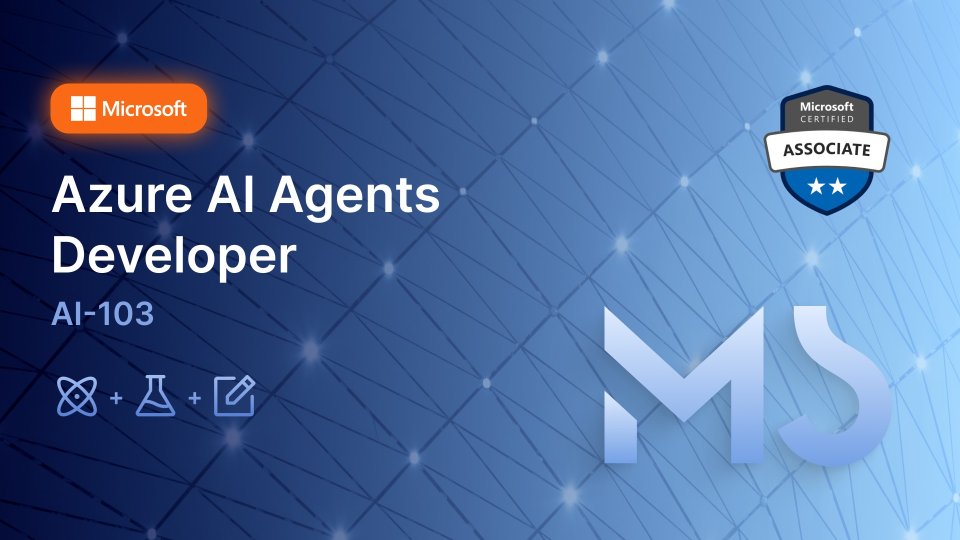 Access the course here: http://mdftpro.com/course/azure-ai-agents-developer
The first half of the course covers how to build, deploy and manage AI agents in Azure AI Foundry. This includes hosting LLMs in Azure, building agents by linking LLMs to tools and search engines, interacting with agents through the OpenAI chatcompletions and Microsoft responses APIs, uploading agents to Microsoft 365 Copilot, and using custom orchestrators with Semantic Kernel.
The second half of the training explores the Foundry Tools (these used to be called the cognitive services): computer vision, speech recognition and speech synthesis, natural language processing, and document intelligence.
This covers all the work that comes with designing and building agentic AI solutions in the cloud. The course assumes you already have an understanding of the capabilities of AI, and are an experienced developer. All code examples in the course use Python.
New courses and retirements
We're in the middle of a wave of course retirements and renewals. Microsoft retired the AI-102 training in June, but the upgraded AI-103 training has been available since April.
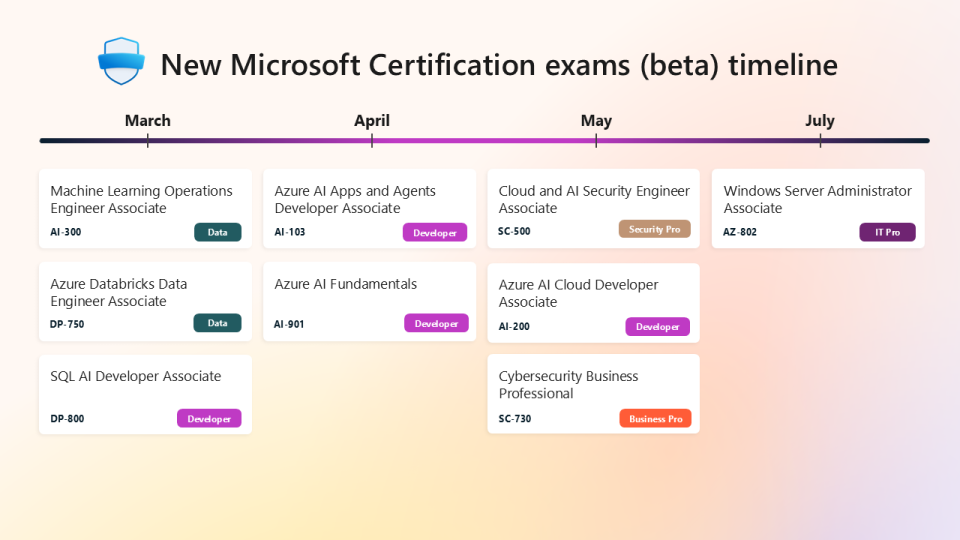
So if you were planning on getting the AI-102 certification, you need to switch today. The new exam will be broadly similar to the old AI-102 exam, but you can expect a lot more questions about agentic features in Azure AI Foundry on the exam, for example setting up tools and RAG, and configuring custom orchestrators with Semantic Kernel.
Differences between the AI-102 and AI-103 courses
When I used to deliver the old AI-102 training in a classroom setting, we would spend a single day covering LLMs, prompting, building agents with tools and search, and setting up RAG. The remainder of the course covered the Foundry Tools, with the labs having students call these services directly from their code.
But the new AI-103 classroom training has a very strong agentic flavor. Not only do we spend two days on agents (which I think is totally fair), but in the remaining half of the training, we only look at the Foundry Tools through the lens of genAI. So instead of interacting directly with a computer vision model, the course covers how to set up an MCP server so that an agent can call a computer vision model on our behalf.
I have mixed feelings about this. Using AI agents as the front-end for everything is not very robust (because of the hallucination problem), but it's also ridiculously compute intensive and wastes a ton of energy. Why ask an agent to feed an image into a computer vision model when we can do it ourself with one single API call?
I think the topics covered in this course are very useful and valuable, but by placing an agent in front of everything, we may be teaching new developers a very bad habit.